Puffins are one of those species that people often mention when talking about wildlife they would love to see. They feel special, slightly out of reach — something you might be lucky to glimpse once, if at all.
In reality, with a little planning and forethought, it’s surprisingly possible to see them in the UK if you really want to. For the past few years, I have travelled to the south-west tip of Wales to visit Skomer Island, with the hope of seeing puffins. Each visit has been different, and over time I’ve learned a few things that might be helpful for anyone hoping to see them in the wild for the first time.
When to Visit
If you’re hoping to see puffins, they typically arrive from late April and leave in late July or early August. I have usually aimed for mid-May, when the bluebells are also in flower. It’s a beautiful time to be there.
I’ve visited at the end of July, when very few puffins were visible. By then, many are in their burrows, out at sea, or have already left. On that visit, I managed one photograph which, in its own way, was enough.
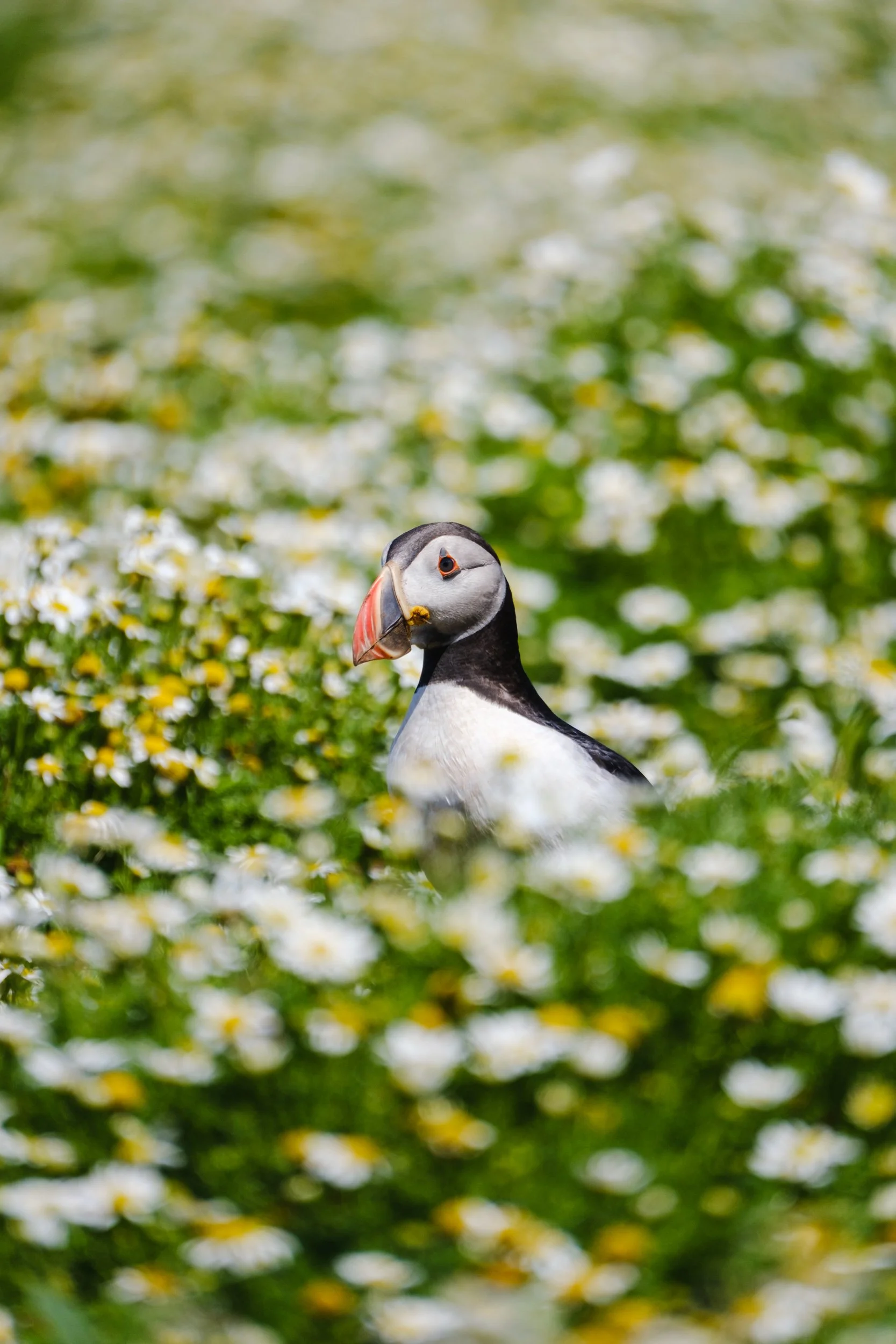
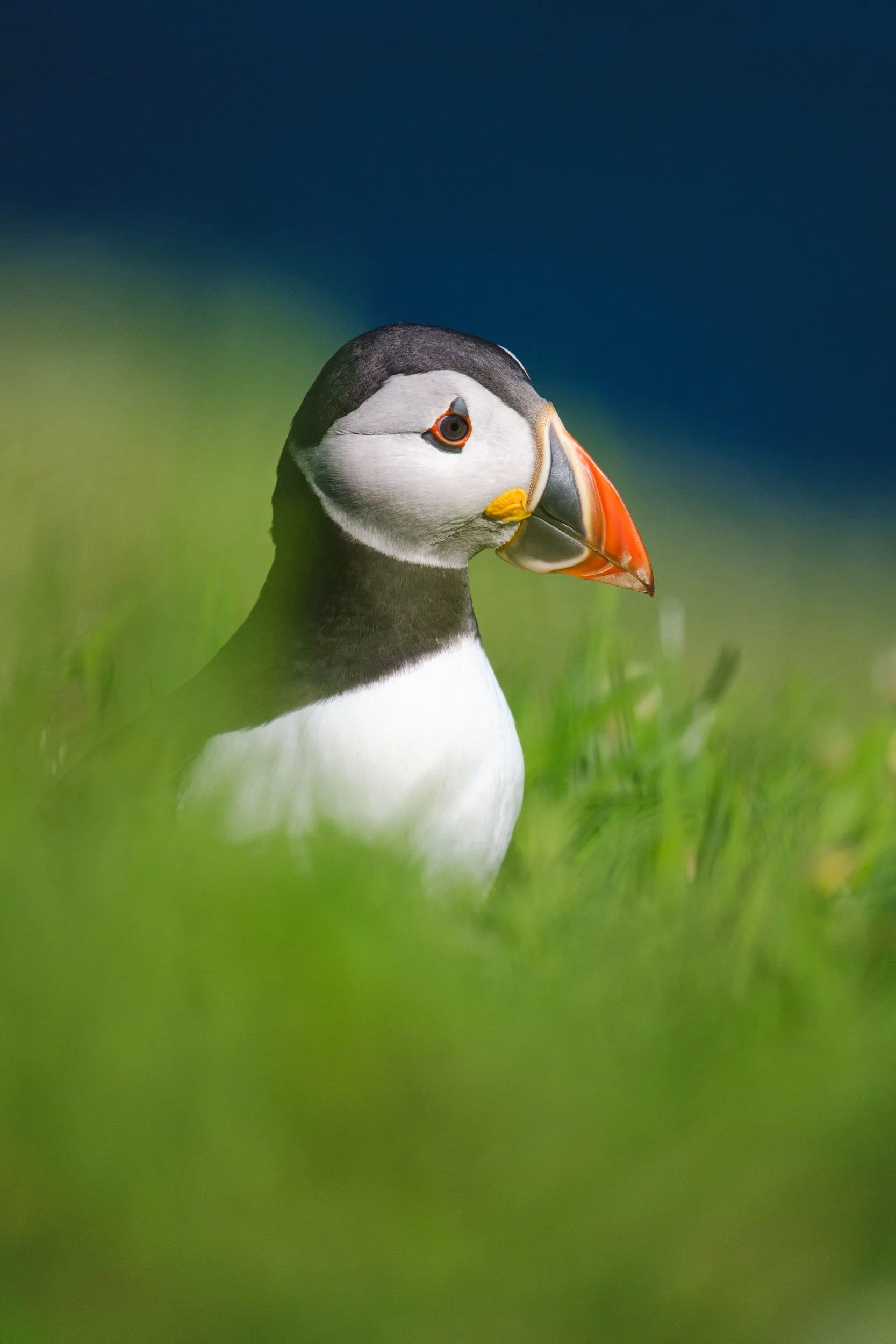
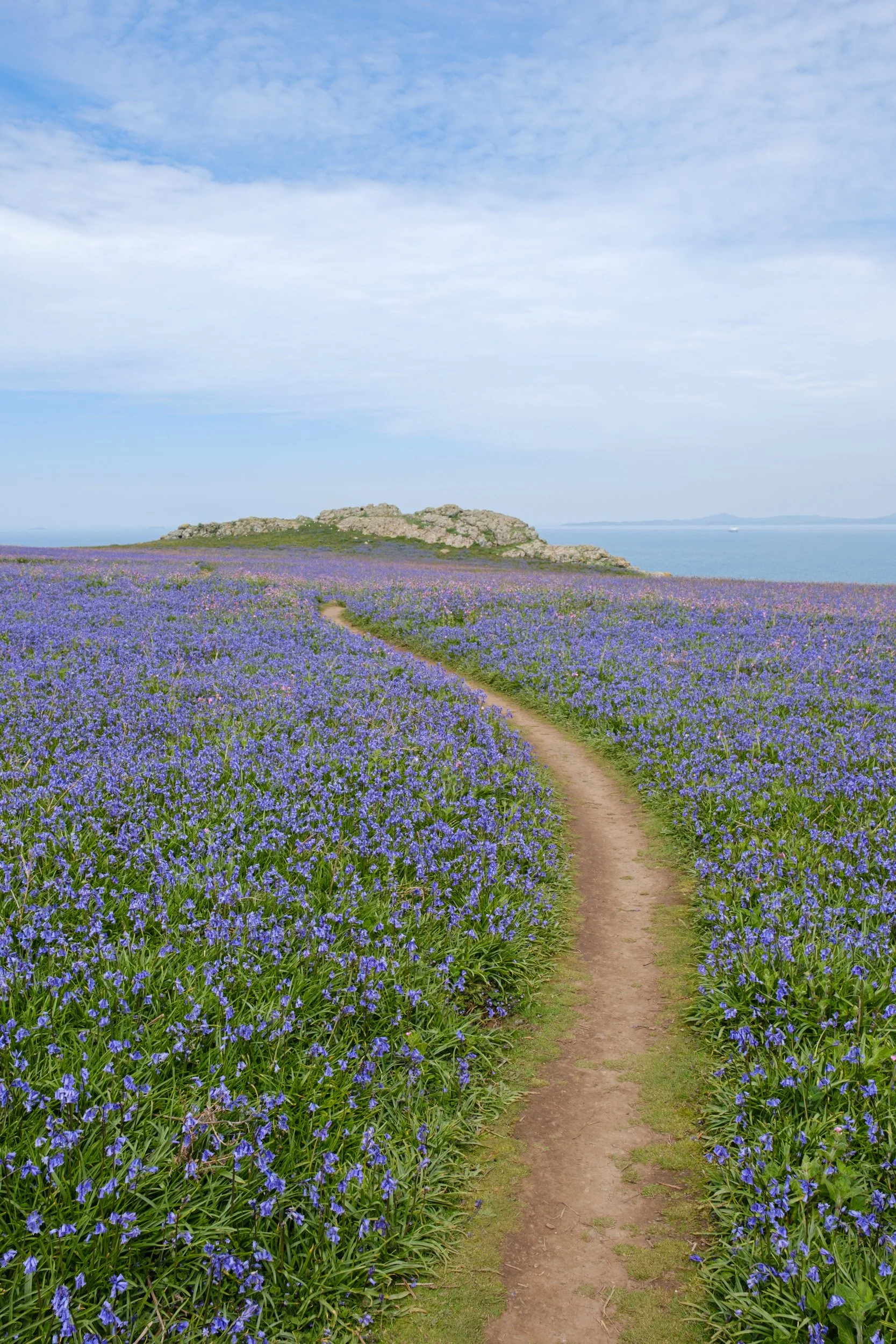
On another visit in mid-May, the island felt alive with them. Puffins were everywhere, close to the paths, full of character and movement. It showed me how much timing matters.
I have always visited Skomer with photography in mind, but what always strikes me is how many people visit simply to experience the island. First and foremost, Skomer is a nature reserve. It’s an interesting place to visit even without a camera, and that’s worth remembering.
How to Book
I normally start thinking about booking a day trip to Skomer in September of the year before. This is because I have found the specifics to be different every year, so the dates that bookings open one year will not necessarily be the same the next. At the time of writing (October 2026) I know I can book 2027 day sailings with Pembrokeshire Islands Boat Trips from 1st December 2026. If you want to secure the very limited number of spaces to stay overnight, I believe this is something that had to be done in September, but do your own research for that. Whatever you’re planning to do, get in there early.
Every Trip is Different
My planned visits have had mixed success. The first time I tried to visit the island, it got cancelled. I had travelled to Tenby the day before, booked a hotel, and taken time off work. The evening before I was due to catch the ferry, I received a message warning that bad weather might result in a cancellation. And sure enough whilst eating breakfast the next morning, it was confirmed — all sailings were cancelled.
It was disappointing. After nearly 300 miles of driving and the cost of accommodation, I wasn’t going to see any puffins. But cancellations are part of visiting a place like this, and whether I liked it or not, I knew this was a possibility. Nature decided that it wasn’t meant to be this time. After feeling a little defeated for a few minutes, I picked myself up and dusted myself off. I knew it would not be possible to go the next day because the ferries are booked up months in advance so if your ferry is cancelled, there is no getting on another one. So I ventured to the Brecon Beacons where I did some hiking instead, which softened the blow and reminded me of the value of having a backup plan. t
Based on this experience, I’ve tried to plan things a little more simply for subsequent trips to find a better balance. I’ve tried doing it all in one day, but that is too much for me. I got up at 3:30am, was on the road by 4am and didn’t get home until after 10pm. So it’s possible, but not ideal. The last time I went, I drove to Wales and went on the island, and then had a hotel booked a couple of hours into the journey back. I was able to get to the hotel at a reasonable time in the evening, rest and then tackle the journey back the following day. I’ve also tried to manage my expectations better, but that is easier said than done. It’s all trial and error and depends on many factors. Your circumstances will differ from mine.
On the Island
To get to Skomer Island you have to catch a ferry from Martin’s Haven. There is a National Trust Car Park there, and a little visitors shop, but not a lot else. The ferry takes about 15 minutes and you may well get your first sighting of a puffin whilst on it. They seemed to shoot past the ferry like bullets as they travel out to sea for fish. Once the ferry is docked and you have disembarked, there is quite a steep set of steps to climb before a brief chat from the volunteer staff about what to do and what not to do.
I’ve only experienced Skomer in clear weather, but it’s important to know that there is very little shelter on the island. Apart from one central building used by staff and volunteers, there’s nowhere to hide from sun, wind, or rain. Once you arrive, you’re there for around five hours, and conditions can change quickly. Good waterproofs and sun protection are both essential.
A small number of spaces are available to stay overnight, but they are booked quickly and months in advance, often by photographers and tour groups. Staying overnight allows access to sunrise and sunset, which day visitors miss. As a day visitor, you must leave at your allotted time, and the last ferry leaves at 5pm, long before the best evening light arrives.
Even on bright days, Skomer can be extremely windy. Puffins love these conditions, which helps explain why tens of thousands of them return here each year. For photographers, strong winds can make handling long lenses difficult and tiring.
The paths on the island are narrow, and tripods are not permitted. Visitors are asked to follow a one-way system, and for good reason. Stepping off the path risks collapsing burrows used by puffins and Manx shearwaters. Wildlife always takes priority over photographs.
You get 5 hours on the island, so there is plenty of time to walk round it. In my experience, it is good to slow down and enjoy it. People stop on some of the rock formations to sit and eat lunch or snacks and look out to sea. It’s not just about getting a puffin picture.
Over time, visiting Skomer has taught me that seeing puffins is as much about patience and respect as it is about timing and equipment. It’s a place that rewards those who slow down, accept uncertainty, and remember that they are visitors in someone else’s home.
For those hoping to take photographs, a few practical notes on equipment may also be useful.
Lenses I’ve Found Useful on Skomer
24–70mm Standard Zoom
Useful for environmental and landscape images, particularly when the bluebells are in flower. I used this lens the least, but it was valuable for setting the wider context of the island.
70–200mm Telephoto Zoom
In some areas, puffins can be very close to the paths. In these situations, this lens is often enough to capture detailed images without needing extreme reach.
180–600mm Super Telephoto Zoom
I took most of my puffin photographs with this lens, particularly at the longer end of the range. It allowed me to isolate individual birds for portrait-style images and was also useful for photographing puffins in flight. I think it’s fair to say that my favourite images were taken using this lens.
It’s also worth remembering that space on the paths is limited. There are few safe places to put down a camera bag and change lenses. For this reason, having one flexible lens is often more practical than carrying several.
If you’re fortunate enough to have a second camera body, this can help, but even then, swapping between cameras can be awkward when sharing narrow paths with other visitors and, of course, with the puffins themselves. You have 5 hours on the island so be patient, stay aware, and respect the island.
Skomer has taught me that the best wildlife experiences rarely go exactly to plan. Ferries get cancelled, weather changes, and sometimes you travel hundreds of miles for a single photograph. But each visit has been worthwhile, even the one where I never made it onto the island. If you're thinking about visiting, my advice is simple: book early, plan for disappointment, and remember that seeing puffins in their natural habitat is never guaranteed — which is precisely what makes it special. When it does happen, those few hours on a windswept island surrounded by thousands of seabirds will stay with you long after you've packed away your camera.
If you enjoyed this, I send an occasional email with new posts and a few other thoughts. You can sign up here.